FALL SEMESTER COHORT CLOSES SEPTEMBER 9th
FOR STUDENTS WHO STUDY ALL DAY LONG BUT STILL FALL BEHIND
I Almost Failed Out of University. Here's the System That Got Me a 3.8 GPA Instead.
The exact academic system Julianne built after nearly burning out in her first year of biomedical science. Learn the planning, flashcard workflow, and study habits she used to earn a 3.8 GPA.
Fall Semester Cohort students get the lowest price ever, direct access to Julianne, and the ability to shape what gets taught. Cohort closes September 9th.
No subscriptions • No upsells • Closes September 9th
"Julianne's methods helped me earn my degree. I can't wait to see what this course has in store!"
★★★★★ Sara D. — Biology Graduate
SEE EVERYTHING INCLUDED BELOW
DOES THIS SOUND FAMILIAR?
It's Monday Night. Your Exam Is Friday.
And You Have 582 Pages to Get Through.
You open your laptop. You scroll through the powerpoint. You do the math.
117 slides per day. Five days straight.
On top of a project due Wednesday. And the other exam the following Tuesday.
You've been running on five hours of sleep for a week already. You've spent hours on YouTube looking for something that actually works and everyone gives you the same generic advice that was clearly written for someone studying a few pages, not hundreds.
And underneath all of it is the thought you don't want to say out loud:
"I don't think I can do this."
THE REAL PROBLEM
The Problem Isn't You.
It's the Method.
The problem isn't your work ethic. It isn't your intelligence. It isn't even your schedule.
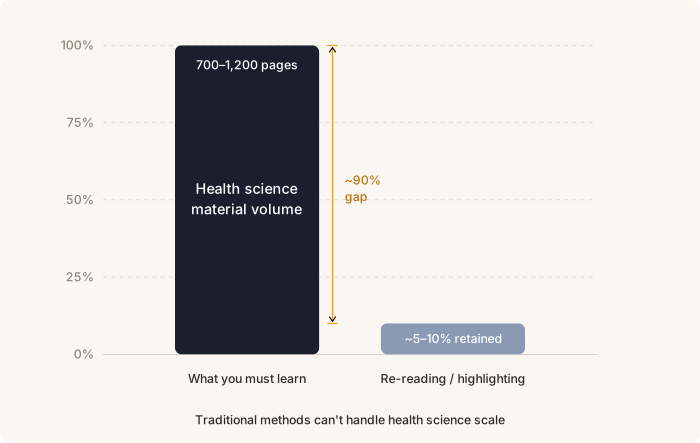
The problem is that re-reading notes and highlighting was never designed for
the volume of material university programs throw at you. It works fine with
40 pages. It collapses completely with 400.
You don't need a better attitude.
You need a study system that's built for the volume and pace of university courses.
HOW THIS SYSTEM WAS BUILT
I Was That Student.
Here's What I Found.
My name is Julianne. A few years ago, I was sitting exactly where you are.
Monday night. 582 slides. Exam Friday. I did the math and felt physically sick. I wasn't behind because I didn't care, I cared deeply. I just kept telling myself I'd start earlier next time, build a better schedule, get ahead of the material.
And then I didn't. Every semester, the same cycle started again. Procrastination, panic, cramming, exhaustion, before the exam had even started.
The night before one biochemistry exam, I had so many slides left that I started skipping them. Trying to guess which ones mattered. I had no system for making that decision.
"I was just hoping."
So I stopped looking for generic study tips and started reading the research on learning, memory, and effective study techniques. I also worked with a friend in neuroscience to better understand how those principles could be applied to the realities of university courses.
What we built wasn't a new app or a new planner. It was a sequence, a specific series of steps that works with how your brain is actually wired.

WHY EVERYTHING YOU'VE TRIED BEFORE DIDN'T WORK
The Five-Part Study System You'll Use Every Semester
You've probably tried flashcards before. Most quietly gave up. Not because flashcards don't work, but because nobody showed you how to build them correctly or use them in the right sequence. A card that copies the slide is not a flashcard. It's just your notes in a smaller font.
HERE'S WHAT THE SYSTEM LOOKS LIKE

Know Exactly What to Study Before You Study It
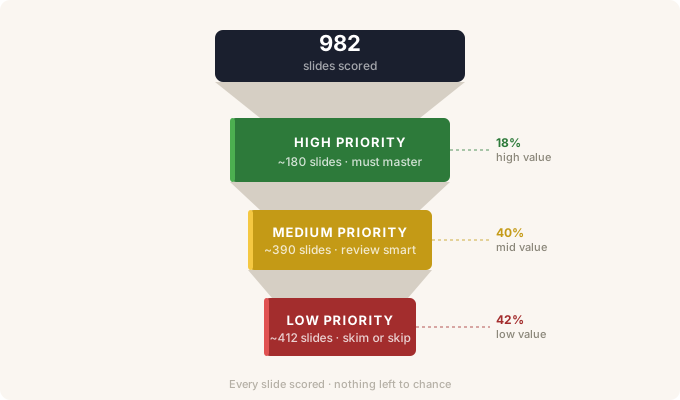
There is a specific scoring method for sorting your slides by exam importance before you start studying. Instead of trying to memorize everything equally and running out of time, you know exactly where to put your energy — and what to deprioritize. This single step changes your entire exam preparation.
Build Flashcards That Help You Remember More
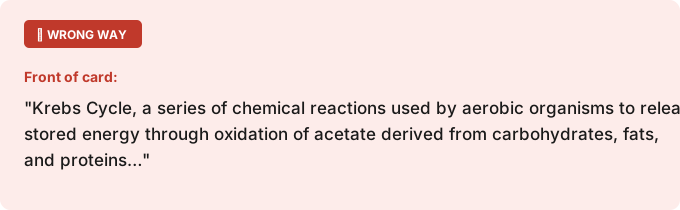
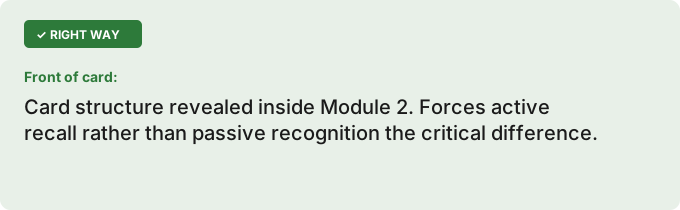
There is a right way and a wrong way to build a digital flashcard. The wrong way looks like your lecture notes. The right way forces your brain to actively retrieve the information — the only mechanism that moves something from short-term exposure into long-term memory.
How to Set Up Anki So It Works for You
At the center of the system is a free flashcard app called Anki. It uses spaced repetition to schedule your reviews, showing you the cards you're most likely to forget while giving less attention to the ones you've already mastered.
Instead of guessing what to review each day, you'll always know exactly where to focus your time. Inside Module 2, I'll show you how to set up Anki from scratch, configure it properly, and use it as part of the complete study system.
You stop wasting time on what you already know. You stop forgetting what you thought you'd learned. You walk into the exam knowing exactly where you stand. Full set up configuration is inside Module 2.
Study in the Time You Were Already Wasting
Research on learning and memory suggests that short, spaced review sessions are often more effective than doing all your studying in one long session.
🚌 On the bus
🍽️ Cafeteria line
📚 Between classes
🌙 Before sleep
A Plan That Adjusts to What You Haven't Learned Yet
Most study schedules are built around time. This system is built around material, specifically, the material you haven't locked in yet. Your plan updates based on what the software tells you still needs work. As the exam gets closer, your focus narrows automatically to exactly what matters. No more guessing. No more hoping you covered enough.
WHY EVERYTHING YOU'VE TRIED BEFORE DIDN'T WORK
She Got a 42% on Her First Organic Chemistry Exam.
Here's What Happened Next.
A close friend was failing organic chemistry. Not struggling, failing. 42% on the first exam. She had studied. She had tried. The method she was using simply couldn't handle the volume and complexity of the material.
I walked her through the system. The scoring method. The card structure. The software. The dead-time study blocks.
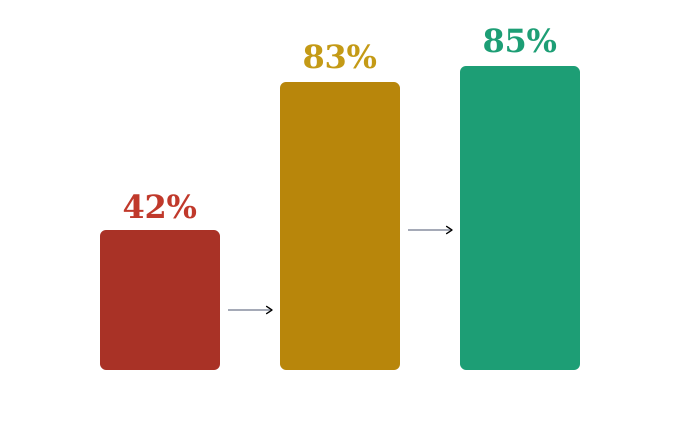
She passed a course she would have had to retake. With grades she had never come close to in that subject. The system didn't make her smarter. It gave her a method her brain could actually work with.
WHAT YOU GET INSIDE THE COURSE
Six Modules. One Complete System.
Build for University Students
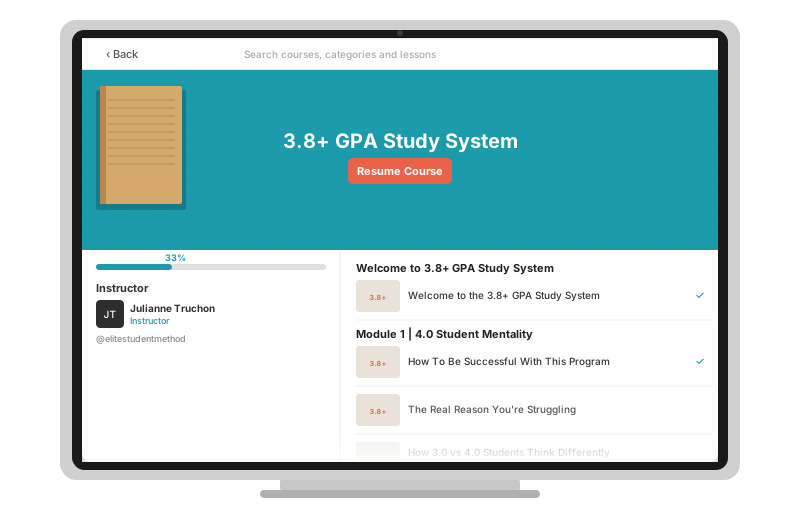
MODULE 01
4.0 Student Mentality
Addresses the patterns that keep students stuck: procrastination, the guilt cycle, all-or-nothing thinking and replaces them with the habits of a student who performs under pressure. This will allow you to stay consistent throughout the semester.
FOUNDATION
MODULE 02
Flashcard Mastery
The complete flashcard system from scratch. How to build cards that support long-term retention through active recall. The scoring method for sorting your slides. The powerful software setup and full configuration. The spaced repetition sequence that works.
CORE SYSTEM
MODULE 03
Building Your System
How to design your semester so you are never cramming again. The planning framework that accounts for your material, your exam calendar, and your life. A schedule that adjusts so one bad day doesn't collapse the week.
PLANNING
MODULE 04
Identity And Staying The Course
Overcome the self-doubt and imposter syndrome holding you back academically. Build a sense of self-worth beyond your GPA, set healthy boundaries, and develop the mindset to show up consistently without burning out.
CONFIDENCE
MODULE 05
Exam Day
What to do in the 48 hours before an exam. How to use the final review period to consolidate rather than cram. The pre-exam protocol that keeps you calm, focused, and operating at your actual capability.
PERFORMANCE
MODULE 06
Implementation & Real Life
How to run this system when life is imperfect, which is always. How to adapt across different courses, professors, and exam formats. The practice that turns the system from a strategy into a habit.
LONG-TERM
YOUR INSTRUCTOR

3.8
GPA achieved using the system in my first year in biomedical science
92%
First exam result using the flashcard method in biochemistry
+41%
Grade improvement seen in first student who used the system
Hi, I'm Julianne.
I built this system because I needed it and it didn't exist.
My first year of biomedical science almost broke me. Not because the material was beyond me, but because nobody had ever taught me how to handle it. I was smart enough to be in the program and completely unprepared for what the program actually required.
I spent countless hours reading research on learning and memory while testing different approaches in my own courses.
What I teach is the exact system, step by step, that I would go back and give myself on that Monday night staring at 582 slides.
I built this course because no student should have to figure this out alone.
JOIN THE FALL SEMESTER COHORT
Everything You Need to Study with More Confidence and Consistency
Lifetime access to all six modules, the complete flashcard setup, the software walkthrough, and the full planning system. Everything on this page, structured into a course you can start today.
GPA Study System — all 6 modules
$49 value
Private Community — daily access to Julianne
Included
Easy to use templates and checklists
Included
New content added monthly
Included
Lifetime access to all future updates
Included
Total Value
$49
YOUR DISCOUNTED STUDENT PRICE
Revealed at checkout - because you showed up first, you pay the lowest price this course will ever be.
One-time payment · No subscriptions · Lifetime access · Closes September 9h

Go Through the First Two Modules. If You're Not Studying Differently, We Reimburse You
Complete Module 1 and Module 2. Set up the flashcard system. See the scoring method and the software in action.
If you've done that and you don't believe this changes how you study, contact us. Full refund. No forms. No questions.
We offer this because we're confident you won't ask for it.
COMMON QUESTIONS
Frequently Asked Questions
I've tried flashcards before and they didn't work. Why is this different?
Because the way most students make flashcards doesn't work and this course shows you exactly why and exactly what to do instead. The card structure, the software, and the sequence are what make the difference. If you've tried flashcards and given up, this course was built specifically for you.
How much time does this actually take to set up?
The initial setup: software, card structure, first deck, takes one focused session. After that the system runs in fragments throughout your day. Most students report spending less total time studying than before, with significantly better retention.
I'm already mid-semester. Is it too late to start?
No. The scoring method works with whatever material you currently have. Starting with three weeks to go is still enough to see a measurable difference on your next exam.
What type of student is the system built for?
The system was originally built for health science students. These programs demand a high level of memorization and organization. Because it works for the hardest programs, every strategy taught in this course applies directly to yours — giving you the best method available, whatever you're studying.
How long do I have access, and is this a subscription?
Lifetime access. One payment. No subscriptions, no renewals, no upsells. Pay once and it's yours forever, including all future updates.
Does this course teach multiple study techniques?
The primary learning method taught is a flashcard workflow built around active recall and spaced repetition. The rest of the course focuses on organization, semester planning, productivity, exam preparation, and building a repeatable study system.
Is this a guarantee that my GPA will increase?
No. Your results depend on many factors, including your effort, consistency, and the demands of your courses. This course teaches the exact system I used to improve my own academic performance and that other students have successfully applied.
ONE LAST THING
This Is Your Last Chance To Join
The Fall Semester Cohort
On September 9th, the cohort closes. The course will be complete for this period.
If you've read this far, you already know whether this is for you.
One-time payment · Closes May 8th · 30-day guarantee